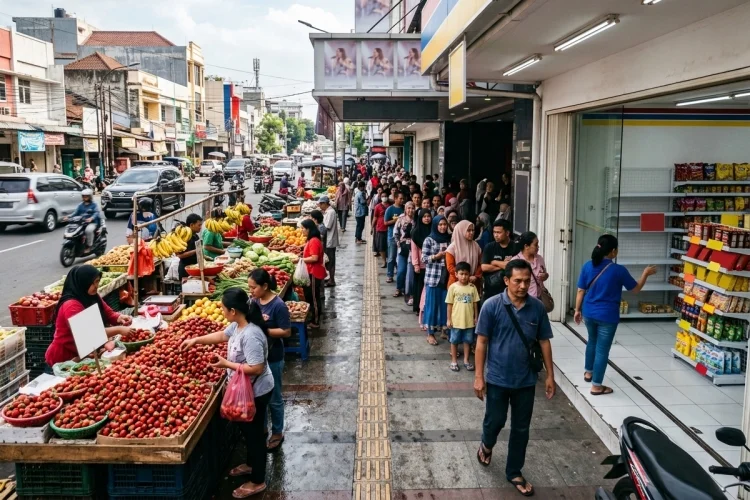
Have you ever noticed strawberries becoming cheaper when they are in season, concert tickets becoming expensive when thousands of people want them, or a popular product disappearing from store shelves soon after launch?
These situations may look unrelated, but they are all connected to one of economics’ most basic ideas: supply and demand.
Understanding how supply and demand influence everyday prices and choices can make everyday economic decisions much easier to understand.
Demand describes how much of a good or service consumers are willing and able to buy at different prices, while supply describes how much producers are willing and able to sell.
When these two forces interact, they help influence the prices and quantities we see in markets. The Federal Reserve’s educational resources describe supply and demand as central to understanding how market prices are determined.
You do not need to be an economist to see this process. It happens every day when you shop, travel, order food, buy tickets, or decide whether something is worth its current price.
1. Demand Starts With What Consumers Want and Can Buy
In economics, demand is more specific than simply wanting something.
You might want a luxury sports car, but if you cannot afford one, that desire does not become effective market demand. Economists describe demand as the quantity of a product consumers are willing and able to buy at different prices.
Price usually affects purchasing decisions.
Imagine your favorite coffee normally costs $4. If the price suddenly rises to $8, you might buy it less often, make coffee at home, or choose another café.
If the same coffee goes on sale for $2, you may be more willing to buy it.
This relationship is known as the law of demand: other things being equal, consumers generally buy more when prices are lower and less when prices are higher.
Demand can also change for reasons unrelated to the product’s current price, including income, preferences, expectations, population, and the prices of related goods.
2. Supply Reflects What Producers Are Willing to Sell
Now look at the market from the seller’s side.
Supply refers to the quantity of a good or service producers are willing and able to offer at different prices during a particular period.
Suppose a farmer grows tomatoes.
If tomato prices are very low, expanding production may not be worthwhile. If prices rise substantially, producing and selling more tomatoes could become more attractive.
That basic relationship is called the law of supply: other conditions being equal, higher prices tend to encourage sellers to supply greater quantities.
However, supply is also influenced by production costs, technology, weather, taxes, regulations, the number of sellers, and expectations about future prices.
For example, a poor harvest can reduce the available supply of a crop even when consumer demand remains strong.
That is where prices can begin changing quickly.
3. Prices Help Balance Supply and Demand
Supply and demand interact continuously.
The point where the quantity consumers want to buy equals the quantity sellers want to offer is called market equilibrium.
OpenStax explains that equilibrium price and quantity occur where the supply and demand curves intersect. At this point, quantity demanded equals quantity supplied.
Imagine a market selling baskets of oranges.
At $20 per basket, customers may buy very few while sellers want to offer many.
At $2, customers may want far more oranges than sellers are prepared to supply.
Somewhere between those prices, buying and selling intentions can become more balanced.
Federal Reserve Education describes equilibrium as the point at which there is no market shortage or surplus.
Real markets are constantly changing, so equilibrium is better understood as a useful model than a permanently fixed price.
4. High Demand Can Push Prices Up
Imagine a famous singer announces one concert in a stadium containing a limited number of seats.
Hundreds of thousands of fans want tickets.
The number of seats cannot suddenly increase, but demand has become extremely strong. That situation can put upward pressure on ticket prices.
Similar patterns can appear with hotel rooms during major events, airline seats around popular holidays, or newly released products with limited inventory.
Demand can increase for many reasons.
A product might become fashionable. Consumer income might rise. A heat wave might increase demand for air conditioners. Expectations can matter too—people may buy more today if they believe prices will be higher tomorrow.
The IMF explains that market prices emerge through interactions between buyers and sellers and that changes in supply or demand can alter those prices.
This helps explain why the exact same product may cost different amounts at different times.
5. Falling Supply Can Also Raise Prices
Prices can rise even when consumers do not suddenly want more.
Sometimes the problem begins with supply.
Suppose bad weather damages a large part of a coffee harvest.
Consumers may still want roughly the same amount of coffee, but fewer beans are available. The reduced supply can place upward pressure on prices.
Other supply disruptions can include factory shutdowns, transportation problems, shortages of raw materials, higher energy costs, or natural disasters.
A real-world example appeared during the COVID-19 period. A Bureau of Labor Statistics review noted that increased demand for durable goods combined with supply-chain disruptions contributed substantially to inflationary pressures during that period.
This illustrates an important point: rising prices do not always mean consumers suddenly became more interested in a product.
Sometimes fewer goods are available.
6. Shortages and Surpluses Send Market Signals
What happens when the current price does not balance supply and demand?
A shortage occurs when quantity demanded exceeds quantity supplied at a given price.
Imagine a store selling a highly desirable game console for a low price. Hundreds of customers may want one, but only 30 units are available.
The shelves quickly become empty.
A surplus is the opposite. Quantity supplied exceeds quantity demanded.
A clothing store might order 1,000 winter jackets but sell only 300. The remaining stock could eventually be discounted.
OpenStax explains that prices below equilibrium can create shortages, while prices above equilibrium can create surpluses.
These situations can influence future decisions.
A shortage may encourage producers to increase supply if possible, while a surplus may encourage sellers to lower prices, reduce production, or change their strategy.
7. Supply and Demand Affect Everyday Consumer Choices
Consumers do not simply observe prices. They respond to them.
Imagine beef becomes significantly more expensive while chicken prices remain stable.
Some shoppers may continue buying beef, but others may switch to chicken.
Economists call products that can replace one another substitutes.
Choices can also involve timing.
If hotel prices are extremely high during peak holiday season, a traveler might visit one month later. If strawberries are expensive outside their main growing season, a shopper might choose another fruit.
This is one reason understanding supply and demand can improve everyday financial thinking.
Instead of seeing a price as completely random, you can ask:
Has demand increased?
Has supply fallen?
Is this a seasonal change?
Are cheaper substitutes available?
BLS notes that frequently purchased products such as food, clothing, and gasoline can experience notable price changes partly because of seasonal supply-and-demand influences.
8. Businesses Respond to Prices Too
Supply and demand influence producers just as much as consumers.
Suppose a bakery discovers that customers constantly sell out its cinnamon rolls by 9 a.m.
That is useful information.
The bakery may increase production because strong demand suggests it could sell more.
Now imagine another product remains unsold every evening.
The bakery might reduce production, lower the price, improve the recipe, or stop selling it.
Prices and sales therefore act as signals.
The IMF explains that market prices help coordinate decisions between buyers and sellers, while supply and demand reflect factors such as preferences, technologies, and production conditions.
Businesses also watch competitors.
If several companies enter a market and increase total supply, consumers may gain more alternatives. Sellers may then compete through price, quality, service, or product features.
Markets are therefore constantly adjusting as both buyers and producers respond to changing conditions.
9. Supply and Demand Do Not Explain Every Price Change
Supply and demand are powerful tools, but real-world prices can be more complicated.
Taxes, subsidies, government regulations, market power, international trade, transportation costs, exchange rates, contracts, and other factors can all influence what consumers eventually pay.
Inflation also matters.
The U.S. Bureau of Labor Statistics defines the Consumer Price Index as a measure of the average change over time in prices paid by consumers for a representative basket of goods and services.
This is different from explaining why one particular product changed price.
For example, coffee becoming expensive because a crop failed is a specific supply issue. A broad rise in prices across many categories is a wider economic phenomenon.
Economists therefore look beyond one simple explanation when studying actual markets.
Supply and demand provide the starting framework, not necessarily the entire story.
Understanding how supply and demand influence everyday prices and choices makes many ordinary economic situations easier to explain.
Demand reflects what consumers are willing and able to buy, while supply reflects what producers are willing and able to sell. Their interaction helps determine market prices and quantities.
When demand rises while supply is limited, prices may increase. When supply expands faster than demand, prices may fall. Shortages, surpluses, seasonal changes, production costs, and consumer alternatives can all affect the choices people and businesses make.
The next time you notice a price changing, do not just ask whether something became “expensive.”
Ask what changed on the supply side, what changed on the demand side, and how consumers and sellers might respond next.